The Financial Wellness Gap Most Companies Forget
Schedule a Call
Over the past decade, employee financial wellness has moved from a “nice-to-have” benefit to a core component of talent strategy. Many organizations now offer competitive 401(k) plans, financial education sessions, and digital tools intended to support employees’ financial lives.
And yet, there is a growing gap hiding in plain sight. Financial wellness isn’t reaching the top.
While these programs are designed to support the broader employee population, they often fail to address the needs of those at the very top of the organization. Executives are frequently excluded from financial wellness initiatives due to a quiet but persistent assumption: they’re well paid, experienced, and surely already have this handled.

The reality is very different. Financial stress does not disappear at a certain income level—it evolves. As compensation grows, so does complexity. And as responsibility increases, available time to manage that complexity shrinks. The result is an overlooked population carrying significant financial stress with limited structured support, creating hidden risk for both the individual and the organization.
Financial Stress Doesn’t Stop at Six Figures
One of the most persistent myths in workplace benefits is that high income equates to high financial confidence. Data tells a different story.
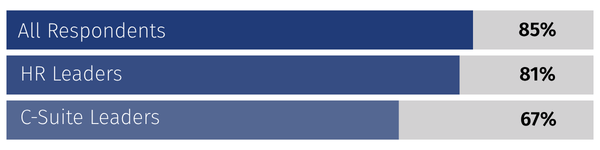
According to the 2024 BrightPlan Wellness Barometer Survey, 85% of all respondents are stressed about their finances, including 67% of C-suite leaders and 81% of HR leaders. Even among employees earning $100,000 or more, only 30% describe their financial situation as “excellent.”
Financial stress is not confined to early-career or lower-income workers—it is widespread across levels, including senior leadership. In fact, at least three out of four C-suite respondents report that financial stress has negatively impacted their mental (75%), social (79%), and physical health (76%).
Executives face a unique combination of challenges: complex compensation structures, equity incentives, concentrated wealth, deferred compensation plans, estate planning considerations, and often multiple competing financial priorities at once. Market volatility, tax complexity, and long-term planning decisions amplify this stress—especially when paired with demanding schedules and constant business pressure.
For executives, the challenge is not a lack of access to information—it’s fragmentation. Advice is often scattered across multiple providers, plans, and platforms, none of which are coordinating with one another or aligned with the executive’s full financial picture. Without integrated guidance, decision-making becomes more stressful, not less.
In short, higher income brings different problems, not fewer ones. And the solutions aren’t tailored to how they work and live, meaning the investment you’re putting in may go entirely unused.
The Business Cost of Ignoring Executive Financial Wellness
Financial stress is not just a personal issue—it’s a business issue.
The BrightPlan survey estimates that employees lose an average of 7.3 hours of productivity per week due to financial stress, translating to an estimated $183 billion annually in lost productivity for U.S. employers. Leaders themselves are even more affected, with the C-suite reporting an average loss of 11.1 hours per week.
Beyond productivity, retention risk looms large. Seventy-eight percent of leaders say employee financial stress contributed to higher turnover in 2024, including employees leaving for better pay or financial wellness benefits. Issues that only compound in an environment disrupted by factors like AI and remote work.
Executive turnover is especially costly. Replacing senior leaders often involves prolonged searches, expensive transition periods, disruption to teams and clients, and potential cultural risk. Institutional knowledge walks out the door, and it can take years to fully recover momentum.
From this perspective, executive financial wellness is no longer a perk—it is a retention and risk management strategy.
Financial stress is a business issue.
78% of leaders say employee financial stress contributed to higher turnover in 2024. C-suite leaders also report losing 11.1 hours per week due to financial stress.
Why ‘They Already Have Advisors’ Misses the Mark
Another common assumption is that executives already receive sufficient financial guidance through personal wealth managers or advisors.
Based on our experience working with executives, we often see that being a successful executive doesn’t exempt you from from delays in planning, reliance on limited advice, or missed opportunities to improve coordination.
Many executives describe:
- Advisors focused narrowly on investments rather than holistic planning
- Limited coordination with employer-sponsored benefits and compensation plans
- Conflicting advice across tax, estate, and investment professionals
- A lack of proactive guidance during major career or life transitions
For many it boils down to not knowing if something better exists, and we believe working with Plancorp can help bring greatly clarity to those decisions.
The biggest compounding issue is time. Executives may have resources, but they often lack the bandwidth to manage multiple advisory relationships or pressure-test complex decisions independently. The result can be delayed action, increased anxiety, and missed opportunities.
What True Executive Financial Wellness Looks Like
Supporting executives effectively requires a different approach—one designed around complexity and time constraints, not basic education.
True executive financial wellness includes:
- Highly personalized, fiduciary advice
- Coordination across compensation, benefits, taxes, investments, and estate planning
- A proactive advisor who understands executive compensation structures
- Concierge-level access that respects time limitations
- Confidential, employee-first guidance aligned with the employer’s benefit framework
Research shows that when financial wellness is done well, the impact is meaningful. 83% percent of employees say they would be positively impacted by access to financial wellness benefits, citing increased financial security, motivation, engagement, and likelihood to stay with their employer. That mindset absolutely carries to the top ranks of companies.
How Plancorp Addresses the Executive Wellness Gap
For decades, Plancorp has worked closely with executives navigating complex financial lives. As a fee-only, fiduciary firm, Plancorp’s role is not to sell products, but to serve as a trusted advocate bringing clarity to complexity.
Over time we’ve worked with many executives at companies navigating complex equity or deferred compensation and it is with that background we built the Executive Concierge Program to address the needs traditional benefits overlook. The program is:
- Optimized for simple data collection to power real insights
- Ready for senior leaders with complex compensation and planning needs
- Structured to be reasonable and scalable for employers
- Intended to provide clarity and support informed decision-making
The Plancorp Difference:
By integrating an employer benefits review into comprehensive personal planning, Plancorp's Executive Concierge Program is designed to help executives reduce financial complexity, support decision-making, and stay focused on leading the organization.
Evaluating Your Options for Executive Financial Wellness
As organizations begin to recognize the importance of supporting executives’ financial needs, many look to established providers in the executive benefits space. There are high-end solutions available—but they often come with tradeoffs that make them impractical or misaligned for many employers.
These programs are typically positioned as premium executive financial counseling solutions and are often deployed for a narrow group of senior leaders. While recognizable, this approach can present a few real challenges:
- High and rising costs, making broad or sustained access difficult for employers
- Inconsistent service experiences, particularly as advisors manage large books or rotate frequently
- A heavy brand premium, where name recognition outpaces personalization or ongoing engagement
- Limited integration with an employer’s broader benefits and wellness strategy – you do everything their way or you don’t benefit at all
This leaves many organizations stuck between two imperfect choices: premium solutions that are cost-prohibitive and impersonal at scale, or broad-based tools that don’t meet executives where they are.
Plancorp operates intentionally in this middle space.
With decades of experience advising executives, Plancorp offers a concierge-level executive financial wellness solution with a more personalized approach and a service model designed to be practical for many organizations.
Reframing the Investment
At the end of the day, financial wellness should not plateau at leadership. In many ways, the stakes are higher at the top, and supported leaders have incredible impact at your company.
Organizations that recognize and address this gap send a powerful message: we support our leaders as people, not just numbers. Doing so strengthens retention, protects institutional knowledge, and reinforces a culture of holistic well-being.
We’re encouraging more companies we work with to reframe the conversation about financial wellness to be full-stack across their company and to partner with the folks who do that work best.
If you’re interested in having a conversation about whether the executive concierge program is a good fit for your team, let’s chat.
Disclosure
For informational purposes only; should not be used as investment tax, legal or accounting advice. Plancorp LLC is an SEC-registered investment adviser. Registration does not imply a certain level of skill or training nor does it imply endorsement by the SEC. All investing involves risk, including the loss of principal. Past performance does not guarantee future results. Plancorp's marketing material should not be construed by any existing or prospective client as a guarantee that they will experience a certain level of results if they engage our services, and may include lists or rankings published by magazines and other sources which are generally based exclusively on information prepared and submitted by the recognized advisor. Plancorp is a registered trademark of Plancorp LLC, registered in the U.S. Patent and Trademark Office.
Like What You’re Reading? Get Insights to Your Inbox. Unsubscribe Anytime.
Schedule a Call With a Wealth Manager to Get Started
Let Plancorp help so you can focus on making the most of your wealth
- Personal & Business Solutions
- Popular Resources
- Free Financial Analysis Tool
- Money Match Quiz
- Fee & Value Calculator
- Early Retirement Guide
- Equity Compensation Guide
- Estate Planning Guide
- Employee Stock Purchase Plan (ESPP) Guide
- Restricted Stock Units Guide
- Invest by Age Series
- Glossary of Financial Terms
- Client Guide
- What to Expect During an Advisor Transition
St. Louis, MO | Fresno, CA | Nashville, TN | Sarasota, FL | San Francisco, CA
Direct: 636-532-7824 | Toll Free: 888-220-1163
© 2026 Plancorp, LLC. All Rights Reserved.